How the Feva and Tera spread, 2010-2011: country by country
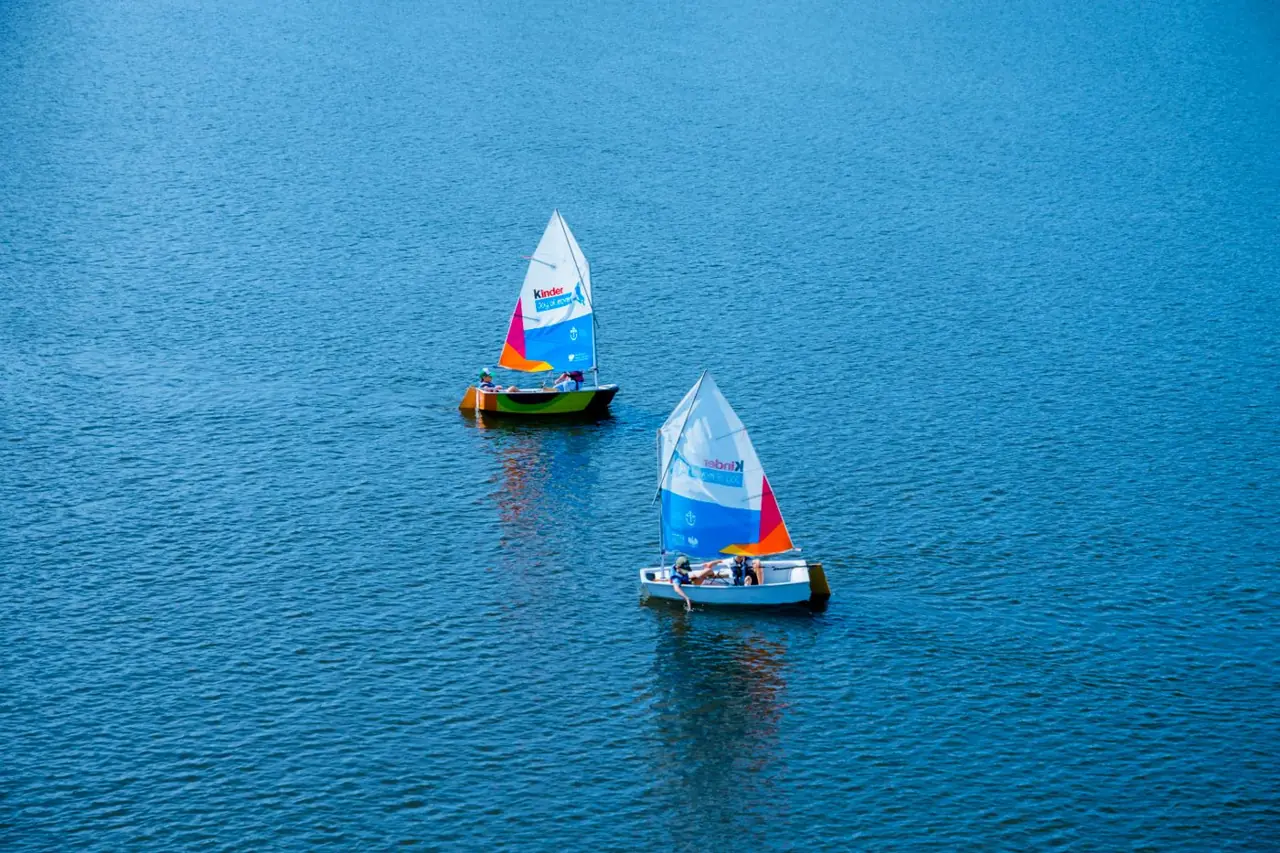
A racing class spreads like a rumour. Somebody sees a boat at a show, a club buys six, a parent starts a newsletter, and three years later there is a national championship. The class news of 2010 and 2011 caught two junior classes in the middle of that process. The posts read like dispatches from a dozen small beginnings.
The two boats are the RS Tera, a single-hander, and the RS Feva, a two-hander with an asymmetric spinnaker. By 2010 a reprinted Italian article was claiming 5,000 Fevas built. The Tera page listed active fleets in the UK, Denmark, Sweden, Italy, South Africa, Australia, Poland and Qatar.
Three ways a fleet begins
Reading the posts together, the same three stories keep turning up.
- A federation buys in bulk. Estonia, Denmark, Norway.
- A club programme does the work. Hong Kong, Risør, Blairgowrie.
- One determined volunteer. South Africa, above all.
Africa
South Africa
No fleet gets more affectionate coverage. The correspondent was a Tera parent, Cathy Avierinos, who by the secretary’s account got up at 4 a.m. to send results down a slow connection from the Vaal Dam.
The Tera page records the start: a first appearance at the Western Cape Championships, clubs adopting the boat as their junior single-hander, and six Teras selected for the 2010 Worlds at Carnac. In December 2010 the class held its first national championship as part of the national youth regatta. Sam Bronner won, with Andre Bredenkamp second and James Hellstrom third, one point behind.
Then came the provincials. Ten boats raced the Southern Cape event over New Year, enough, the report notes with some relief, to count as a class. Six sailed in KwaZulu-Natal. The line that explains everything is in that report: wherever the Teras went, other children jumped into them between races.
Five South African boats were on the entry list for the 2011 Worlds in Denmark, with one from Botswana beside them.
Asia and the Pacific
Hong Kong
The Feva fleet was built by two clubs, Aberdeen Boat Club and the Royal Hong Kong Yacht Club. A results table from the Southside Regatta in December 2010 shows nine boats and three different race winners over six races, with Peter Simpson and Ashley Tang on top.
A Hong Kong pair had raced the RS500 Worlds in 2010 and had a great sixth place in one race. The following February the class news announced four Fevas entered for the Worlds at the same Dutch venue, and credited the two clubs’ youth programmes.
Australia
One small post shows how it starts. Blairgowrie Yacht Squadron on Port Phillip Bay bought four Feva XLs with sponsors’ help, for teenagers who had outgrown their Minnows. The club was also looking at buying a waterproof video camera.
Scandinavia
Denmark
Denmark is the federation model at full scale. According to the Italian article, the Danish federation’s scheme was supporting clubs to buy about 100 more Fevas and 75 Teras in 2011, on top of the previous year. The class’s own announcement of the Tera Worlds at Aabenraa credits a deal with the sponsor TORM and says the Scandinavians had taken the Tera to their hearts. The first entry for those Worlds came from Denmark, and 16 Danish boats were on the entry list.
Norway
The same article has the Norwegian federation helping to buy another 50 Fevas. What that looks like on the ground is in a lovely profile of Risør sailing club on the south coast. Eight Fevas, bought with club funds and sponsorship. Free courses and free use of the boats for any child who joins. Training on Tuesday nights, racing on Wednesdays. The dinghy base is on an island given to the townspeople by its last owner. The club hoped to take six or seven boats to the 2011 Worlds, and its sailors already held the Norwegian class title.
Sweden
Sweden had the liveliest racing fleet of the three. The Fevas drew attention at the winter boat show, and then the class landed a coach: Sara Engström, a skiff sailor with an Olympic campaign of her own. The youth nationals were at Arkösund in June. The class nationals at Gottskär in August drew 25 boats, many straight from the Worlds, and were won by Rebecca Netzler and Linus Berglund in the last race. A week-long camp for Feva and Tera sailors on the island of Brattön followed.
Central and eastern Europe
Poland
The Polish Tera fleet began in autumn 2010 with a training event for 30 sailors, a remarkable first turnout. The Tera page also reports the backing of Mateusz Kusznierewicz, the Finn sailor, and expected the Poles to become a force quickly.
Estonia
In May 2011 the Estonian Yachting Union, with a commercial partner, introduced 18 Fevas in one go. Its secretary general called it one of the most important achievements in the union’s history. A launch video showed the boats sailing from the 1980 Olympic facility.
Slovakia
Slovak sailors were match racing in Fevas that April, in very light wind. The post thought they sailed the boats nicely and would soon be a force. The photographs came from the sailors’ own website.
The old heartlands
Italy
Italy was already a Feva power. An Italian crew finished third at the 2010 Worlds and sailed straight over to congratulate the British winners, a moment the class’s year-end review chose as its proof of the class spirit. The Ligurian article described the Feva as the standard boat in the region’s sailing schools and trailed a national federation pilot scheme. At Easter 2011 the Italians ran the first Garda Cup, where the Fevas were the biggest fleet.
The Netherlands and France
The Dutch hosted the 2011 Feva Worlds and ran an open national championship for the third year, with about 35 boats. The organisers regretted that all of them were Dutch. In France, the Italian article says, a large sponsor was funding a fleet for a national circuit, with the boats to be sold on to clubs afterwards.
Britain
The UK remained the centre of gravity, with half the Feva Worlds entry. The British stories are small and cheerful: winter training, a school team winning a tongue-in-cheek indoor championship, team racing at the Southampton Boat Show.
What the worlds numbers say
| 2010 (Carnac) | 2011 | |
|---|---|---|
| Feva | 140 on the start line | 152 entered by 5 July, from 11 countries |
| Tera | fifty-odd | 45 on the entry list, from 6 flags |
The 2011 Feva notice capped the fleet at 180 and threatened a quota per country if it filled.
Why it worked
The posts suggest a few reasons, and none of them is about boat speed.
The boats were cheap to keep and hard to break, which matters when a club owns the fleet and twenty children use it. Buying in batches gave new countries an instant start line. And the social side was taken seriously: prom dinners, daily prizes for the tidiest dinghy park, a Nations Cup inside the harbour. Children who enjoy the week come back, and they bring friends.
The Risør profile ends with the club’s own summary. Several of its sailors would outgrow the Feva within a year, and a world championship would be a high point before they moved on. Most youth classes would settle for that.
Questions readers ask
Which countries took up the RS Feva and RS Tera in 2010 and 2011?
The class news of those years records new or fast-growing fleets in South Africa, Poland, Estonia, Slovakia, Hong Kong and Australia, alongside established ones in the UK, the Netherlands, Italy, Sweden, Norway and Denmark.
How did new fleets usually get started?
Mostly through clubs or national federations buying several boats at once and lending them to children. Estonia launched 18 Fevas together, and Danish and Norwegian federations helped clubs buy boats in bulk.
How big were the junior world championships?
At Carnac in 2010 there were 140 Fevas on the start line and fifty-odd Teras. For 2011 the Feva entry was capped at 180, and 152 boats from 11 countries had entered by early July.
What is the difference between the two boats?
The Tera is a single-hander and the Feva a two-person boat with a spinnaker. Class reports of the time have sailors starting in the Tera and moving on to the Feva.